Food System Dialogue
For Living Farms, Food Sovereignty is not merely the availability of foods & calories. It is the rights of community to healthy and culturally appropriate food produced through ecologically sound and sustainable methods.
Living Farms philosophy is rooted in the traditional wisdom of the Kondh community. We believe that a resilient food system is inseparable from community identity and collective action. In the Adivasi worldview, food sovereignty is not an individual struggle but a collective responsibility. If one household lacks food, the entire village / Kutumb is responsible for ensuring they are fed. Living Farms views the food system as a holistic cycle that includes the land, forest and other commons, the seeds, and the social bonds of the people. Living Farms aims to revive this “Collective Way of Life,” moving away from the modern shift towards individualism and commercial dependency and returning to a system where the community has total control over what they grow and eat”.
Strengthening the Food System: Living Farms strategy and Action
Living Farms has been working on multiple areas to strengthen the local food system, ensuring it remains climate resilient, biodiverse, culturally appropriate and independent.
Promoting Agro-ecology and Crop Diversity:
Modern agriculture practices (growing a single crop with chemical fertiliser and pesticides) threatens food security and left Adivasi community in a vulnerable condition. Living Farms is helping farmers to reflect critically on the modern agriculture system and once their existed sustainable food system. Experienced Kondh farmers are really wise, they reflect excellent and see the pros and cons clearly not like the younger farmers.
Living Farms is helping farmers to revive their year-long mixed cropping practices, which is climate resilient and keeps soil fertile. By growing a variety of crops together, farmers ensure that food and nutrition are available at the household level throughout the year. We are helping farmers to revive their rich crop diversity, which had been lost in the near past. As of now we have been able to revive more than 10 varieties of indigenous paddy, 12 varieties of millets, pulses and oilseeds. Farmers have been trained on the various techniques of improving soil fertility and pest & disease control mechanisms by using local bio resources and practicing same to increase their harvest.
Nutrition Garden: We are promoting “Nutrition Garden” featuring more than 12 varieties of indigenous vegetable seeds grown organically. This ensures families have daily access to diverse, “poison-free” vegetables on the plate.
Seed Sovereignty: The heart of the food system
Seeds are the primary link in the food chain. To prevent dependence on expensive, commercial hybrid seeds, Living Farms continuously working on revival of indigenous seed varieties, which were once part of the community life. Living Farms is promoting indigenous, climate-resilient seed varieties that can survive and withstand unpredictable weather patterns, reducing the risk of total crop failure. We are connecting farmers across GP, Block and District to revive those seed varieties.
Community Seed Banks: Living Farms is promoting community level seed banks leaded by women farmers where indigenous seed varieties are preserved and managed. Farmers are borrowing seeds from the seed bank and returning after harvest. This initiative has helped to revive numbers of disappeared seed varieties and educated young farmers on the importance of indigenous seeds towards the agriculture system. More than 30 seed banks have been established in our project area.
Seed Fairs and Exchange: We are organizing events to celebrate seed diversity and reviving traditional seed exchange practices, ensuring that even the most marginalized farmers have access to quality seed. Knowledge around the seed system is being transferred from elder generation to the younger generation through this initiative.
Reclaiming the Commons- Forests and Uncultivated Foods:
Uncultivated Foods: More than 30% of food of Adivasi communities comes from the forest and other commons. These foods are not only help during the lean period but also nutritious in nature. For the Kondh community forest is a major source of food.
Living Farms is working to recognition and promotion of uncultivated foods, which are a vital source of nutrition and knowledge around these. We are organising food festivals at various levels, where community members demonstrate their food heritage, discuss on the foods collected from the commons, elder generations transfer knowledge to the youths and both get ready to protect their forest and other commons.
Forest: Rights and Management- We are helping community members and in claiming their legal rights over their forests through FRA and promoting sustainable forest management to ensure the resources last for generations.
Reviving Collective Social Practices:
The strength of the food system lies in the strength of the community’s collective bonding. Living Farms facilitates critical thinking sessions where community members critically reflect on their way of life and its link to food sovereignty.
Labour Exchange: Living Farms is helping to revive practices where community members help each other in the fields, reducing the need of cash for paid labour and strengthening social harmony. Seed and food exchange practices are also inseparable parts of the community life, and meets the need of the community at the time of the vulnerability. We are keenly focusing on the revival of the communitarian life and sense of collective responsibility, where anybody from the community should not stay hungry becomes the community’s responsibility.
Rights and Entitlements:
Collective Action: We are focusing on strengthening traditional community organizations (Kutumb) to collectively access government food security schemes and social protection. Living Farms provides required information and training to community members to enable them to access the services freely.
Livelihood Security: Food-First Approach
Living Farms advocates for a shift in how “cash” is perceived in agriculture:
Food-Cash Crops: Instead of shifting entirely to commercial cash crops (like cotton or eucalyptus) which cannot be eaten and market is quite unpredictable, we promote crops that serve as both food and a source of income. There are crops like pigeon pea, sesame, castor, mustard etc, which can be promoted as food cash crops.
We encourage a “food-first” approach. Promotes families should save enough food for the entire year’s consumption first and only the surplus is sold in the local market. This protects the household from market price fluctuations and hunger.
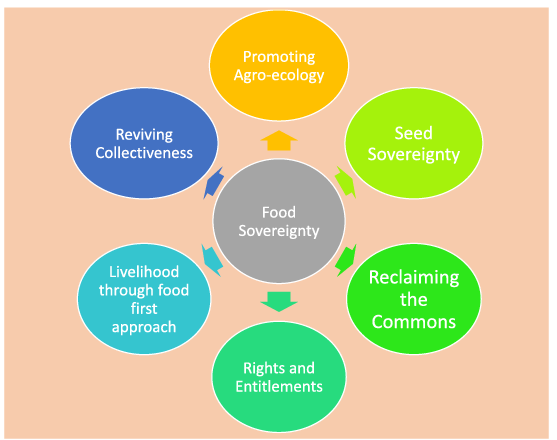
Living Farms work is not only an agricultural intervention; it is an effort to restore the cultural identity and dignity of the Kondh Adivasi community. By strengthening local seed systems, reviving the sense of collectiveness, promoting agro-ecological practices and protecting the commons, we are ensuring that the community does not just survive, but thrives with autonomy. In this system, food is a gift of nature and a bond of the community, not just a commodity.
Living Farms Approach to Food Sovereignty